Chat Live
 Contact Us
 sales@valuetronics.com


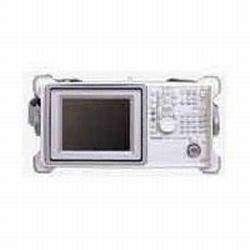
The Advantest U3641 is a 9 kHz to 3 GHz synthesized portable spectrum analyzer designed specifically for field installation and maintenance applications where portability is essential. With a 15 lb base unit weight and the ability to operate from AC line, external DC, or an optional battery pack, the U3641 brings high-stability synthesized-oscillator measurement performance into environments where benchtop instruments cannot go. The synthesized local oscillator enables high-precision and high-stability measurements, and the unit features optional resolution bandwidths down to 100 Hz along with a fast 50 µs zero-span sweep speed for TDMA signal characterization.
Per the datasheet, the U3641 and U3641N are applied to digital mobile communications field measurements (TDMA or CDMA, PCS, and cellular), spectrum monitoring, RF component testing when equipped with the internal tracking generator option, and antenna-feed fault location with BasePak software. The U4941/U4941N and U4342 variants share these applications and additionally suit EMC field measurements with built-in quasi-peak detector and EMC filters. A wide array of analysis functions covers frequency counting with 1 Hz resolution, third-order intermodulation distortion, percent AM, occupied bandwidth, and adjacent channel leakage power, with GO/NO-GO evaluation through limit-line and PASS/FAIL functions.
ValueTronics International stocks, inspects, and tests this Advantest portable spectrum analyzer at our 20,000 sq ft secure warehouse at 1675 Cambridge Drive, Elgin, Illinois. Every unit moves through our in-house verification process before shipping, so you receive a documented, working instrument with a clear condition report rather than an unverified description.
Advantest acquired the Test and Measurement business of Agilent Technologies' former parent in the late 1990s timeframe; the Advantest name on this instrument reflects the company's Japanese T&M engineering heritage and continuing presence in the spectrum analyzer market.
The Advantest portable spectrum analyzer family covers two architectural tiers and two impedance variants in a single ruggedized form factor. The U3641 and U3641N are synthesized 9 kHz to 3 GHz instruments designed for digital mobile communications field measurements where frequency stability is critical. The U4941, U4941N, and U4342 are non-synthesized 9 kHz to 2.2 GHz variants — more economical instruments that share the same portability and ruggedness, suited to cellular and PCS communications work as well as EMC field measurements with built-in quasi-peak detector and EMC filters.
Across the family, the N-suffix variants (U3641N, U4941N, U4342/N) provide 75 Ω input impedance for broadcast and CATV applications, while the non-suffixed models provide the standard 50 Ω RF input. The U4342 differs from the U4941 by including the internal tracking generator as standard equipment rather than as an option.
Each pre-owned model below is its own dedicated product page with condition-matched pricing, condition reporting, and warranty terms. Click through to the model that matches your frequency, impedance, and tracking-generator requirements to see current availability and the specific configuration we have in inventory.
The U3641 sits at the top of the synthesized tier: 9 kHz to 3 GHz coverage with synthesized local oscillator yielding high-precision and high-stability measurements, residual FM ≤60 Hz p-p/100 ms (zero span), and frequency drift <150 Hz/min (span ≤10 kHz). It is the instrument the datasheet positions for TDMA and CDMA field measurements where the synthesized oscillator's stability matters.
The primary differentiator across the family is the local oscillator architecture and the resulting frequency stability specifications. The U3641/N synthesized models specify residual FM ≤60 Hz p-p/100 ms and frequency drift <150 Hz/min. The U4941/U4342/N non-synthesized models specify residual FM ≤3 kHz p-p/100 ms and frequency drift <10 kHz after 30-minute warm-up — adequate for general RF and EMC field work but visibly looser than the synthesized tier.
Frequency coverage and tracking generator configuration round out the differences: U3641/N extends to 3 GHz while U4941/N and U4342 reach 2.2 GHz. The U4342 includes the tracking generator (100 kHz to 2.2 GHz, 0 dBm to −31 dBm in 1 dB steps) as standard; on the U3641/N and U4941/N the tracking generator is Opt. 74. See the comparison table below for the side-by-side specifications and confirm which configuration matches your application before selecting a model.
| Model | Frequency Range | Input Impedance | Tracking Generator |
|---|---|---|---|
| U4941 | 9 kHz to 2.2 GHz | 50 Ω | Optional (Opt. 74) |
| U3641 | 9 kHz to 3 GHz | 50 Ω | Optional (Opt. 74) |
| U3641N | 9 kHz to 3 GHz | 75 Ω | Optional (Opt. 74) |
| U4342 | 9 kHz to 2.2 GHz | 50 Ω | Standard (Built-in) |
Additional differences in specifications beyond the few shown above are not listed here — see each model's full specifications below.
| Specification | Value |
|---|---|
| Frequency Range | 9 kHz to 2.2 GHz |
| Input Impedance | 50 Ω (nominal) |
| RF Input Connector | N-type jack |
| Frequency Span Range | 1 kHz to 2.4 GHz, (Zero Span) |
| Frequency Span Accuracy | ≤±5% (SPAN ≥ 100 kHz) |
| Residual FM | ≤3 kHz p-p/100 ms |
| Frequency Drift (50 ms to 5 s sweep time) | <10 kHz after 30 min. warm-up |
| Resolution Bandwidth (3 dB) | 1 kHz to 3 MHz, 1-3 sequence |
| Bandwidth (6 dB) | 9 kHz, 120 kHz (conforming to CISPR standard) |
| Video Bandwidth | 10 Hz to 3 MHz (1-3 step) |
| Amplitude Range | +20 dBm to displayed Average Noise Level |
| Maximum Input Level (±50 V DC max) | Preamp OFF (Atten ≥10 dB): +27 dBm; Preamp ON (atten ≥10 dB): +13 dBm |
| Reference Level Range | Preamp OFF: Log −64 dBm to +40 dBm (0.1 step); Linear +141.1 μV to +22.36 V |
| Displayed Average Noise Level (RBW 1 kHz, VBW 10 Hz) | Preamp OFF: −117 dBm + 2.7 f (GHz) dB; Preamp ON: −132 dBm + 3.3 f (GHz) dB |
| Frequency Response (Atten 10 dB, 20°C to 30°C, ref 30 MHz) | Preamp OFF: ≤±1 dB (100 kHz to 2.0 GHz); ≤2 dB (9 kHz to 2.2 GHz) |
| Calibration Signal Accuracy | −20 dBm ±0.3 dB |
| Sweep Time | 50 ms to 1000 s and manual sweep |
| Trigger Mode | Free Run, Single, Video, Ext, TV |
| Spectrum Demodulation | AM and FM (FM at RBW ≥ 3 kHz) |
| Tracking Generator | Optional (Opt. 74); 100 kHz to 2.2 GHz, 0 dBm to −31 dBm, 1 dB steps |
| EMC Filters / Quasi-peak Detector | Built-in (well suited for EMI measurements) |
| Memory | Two PCMCIA card slots, JEIDA-Ver.4.1, PCMCIA Rel. 2.0, Type 1 |
| Display | 6 in. TFT Color LCD, ±15° tilt |
| Interfaces | GPIB (IEEE-488), RS-232C (D-SUB 9-Pin), Composite Video Out |
| Operating Temperature | 0°C to 50°C |
| Non-operating Temperature | −20°C to +60°C |
| Humidity | 85% or less |
| External DC Input | XLR 4-Pin; +10 V to +16 V; 60 W max |
| AC Input | 100 VAC and 200 VAC auto switching; 50/60 Hz; 100 VA max |
| Dimensions (W x H x D) | 291 mm x 148 mm x 330 mm (11.375 in. x 5.75 in. x 13.25 in.) |
| Weight | 6.5 kg (14.3 lbs.) |
Please review the Manufacturer's Data Sheet to verify published specifications. Feedback on this webpage is always welcome — please reach out to your Test Architect at any time for questions or concerns. Thank you, we truly appreciate you being our customer.
Model No
Advantest
Condition
Used
Manufacturer
Advantest
Frequency
2.2 GHz


30+ Years in Business

Secure Payments

Sell Test Equipments

Knowledgeable Staff

On-site Lab
30+ Years in Business
Secure Payments
Sell Test Equipments
Knowledgeable Staff
On-site Lab
Request A Quote