 Chat Live
 Contact Us
 sales@valuetronics.com



🎓 Request a Quote To Get An EDU Discount
Couldn't load pickup availability
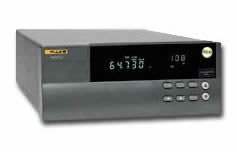
The Fluke 2680A is a modular, networked data acquisition system designed to combine laboratory-grade measurement precision with the flexibility required for industrial monitoring applications. Each 2680A chassis provides six slots that accept user-selectable combinations of Fast Analog Input modules, Precision Analog Input modules, and Digital I/O modules, allowing the system to scale from 20 to 120 universal analog channels in a single chassis. Multiple chassis can be linked through Ethernet TCP/IP to serve more than 2,000 channels across a single network.
According to the datasheet, the 2680A is widely used for R&D applications, environmental testing, product testing and process validation, troubleshooting, and manufacturing test systems. The datasheet specifically identifies deployment environments including high-voltage substations, nuclear power plants, clean rooms, production lines, and automotive test tracks. The system's combination of standalone and distributed networked operation makes it suitable for both stationary laboratory installations and applications where data must be distributed to multiple users in real time.
The Fluke 2680 Series consists of two chassis variants, the 2680A Data Acquisition System and the 2686A Data Logging System, sharing the same six-slot modular architecture, the same module compatibility, and the same Fluke DAQ software. Both chassis accept up to five 20-channel analog input modules plus a digital I/O module in the sixth slot, or six analog input modules for a maximum of 120 universal analog channels per chassis.
The two chassis differ in how acquired data is stored and routed. The 2680A is the network front-end variant, distributing data over Ethernet 10/100BaseT to one or more host PCs. The 2686A adds a PCATA flash memory drive that writes scans directly to a removable memory card, supporting standalone data logging in locations without continuous PC connectivity. Both chassis can also be combined in the same installation, with the 2686A providing local card-based data security alongside the 2680A's networked operation.
Each pre-owned 2680 Series chassis below is its own product page with condition-matched pricing. Module selection is independent of chassis selection: a 2680A or 2686A chassis can be configured with any combination of 2680A-FAI, 2680A-PAI, and 2680A-DIO modules to match the application's mix of throughput, isolation, and digital I/O requirements.
The 2680A is the chassis variant for installations where measured data is consumed by a networked host PC or distributed across multiple PCs over a LAN. It does not include onboard removable storage; the 2680A relies on its 10/100BaseT Ethernet interface and TCP/IP protocol to deliver data to Fluke DAQ software or OPC-compliant client applications running on the network.
Choose the 2680A when the data acquisition system will operate with a continuously available host PC and the priority is networked distribution of measurements to one or more clients. Choose the 2686A when the installation is remote, mobile, or otherwise operates without persistent PC connectivity, since the 2686A's onboard PCATA flash drive captures scans locally to memory cards ranging from 16 MB up to 1 GB. Storage capacity scales with channel count: at 120 active channels, a 16 MB card holds 28,613 scans, a 256 MB card holds 448,000 scans, and a 1 GB card holds 1.792 million scans according to the datasheet's capacity table.
Both chassis use the same modules, the same Fluke DAQ software, the same Ethernet interface, and the same digital I/O and relay capability. Refer to the comparison table that follows for the chassis-level distinction between networked operation and removable memory card logging.
| Model | Channels per System | Max Throughput | Basic DC Accuracy |
|---|---|---|---|
| 2640A | 20 to 400 | 100 Rdgs/s (1000 across system) | 0.01 % |
| 2680A | 20 to 2000+ | 3000 Rdgs/s | 0.01 % |
| 2686A | 20 to 120 per chassis | 3000 Rdgs/s | 0.01 % |
| 2620A | 21 | 17 Rdgs/s | 0.018 % |
Additional differences in specifications beyond the few shown above are not listed here — see each model's full specifications below.
| Specification | 2680 Series | Hydra Series | NetDAQ Series |
|---|---|---|---|
| Channels per System | 20 to 2000+ | 21 to 42 | 20 to 400 |
| Max Throughput (Rdgs/s) | 3000 | 17 | 1000 |
| Basic DC Accuracy | 0.01 % | 0.018 % | 0.01 % |
| Universal Signal Conditioning | Yes | Yes | Yes |
| PC Interface | Ethernet 10/100 BaseT | RS-232, PCMCIA, IEEE-488 | Ethernet 10BaseT |
| Operating Temperature | -20 °C to 60 °C | 0 °C to 60 °C | -20 °C to 60 °C |
| Storage Temperature | -40 °C to 70 °C | -40 °C to 75 °C | -40 °C to 70 °C |
| Power (AC) | 100 to 240 V AC, 50/60 Hz, 100 VA max | 90 to 264 V AC, 50/60 Hz, <10 W | 107 to 264 V AC, 50/60 Hz, <15 W |
| Power (DC) | 9 to 45 V DC (50 W max) | 9 to 16 V DC (<4 W) | 9 to 16 V DC (<6 W) |
| Altitude (Operating) | 2000 m | Not specified | 2000 m (6,500 ft) |
| Altitude (Storage) | 12,200 m | Not specified | 12,200 m (40,000 ft) |
| Clock Accuracy | 1 minute/month (0 °C to 50 °C) | 1 minute/month (0 °C to 50 °C) | 1 minute/month (0 °C to 50 °C) |
| Normal Mode Rejection | 50 dB @ 50/60 Hz, ±0.1 % | 53 dB (60 Hz), 47 dB (50 Hz) | 50 dB @ 50/60 Hz, ±0.1 % |
| Trigger Input Min Pulse | 5 µs | 5 µs | 5 µs |
| Ethernet Standard | IEEE 802.3, 10/100BaseT, TCP/IP | N/A | IEEE 802.3, 10Base-2 and 10Base-T, TCP/IP |
Please review the Manufacturer's Data Sheet to verify published specifications. Feedback on this webpage is always welcome — please reach out to your Test Architect at any time for questions or concerns. Thank you, we truly appreciate you being our customer.
Model No
Fluke
Condition
Used
Manufacturer
Fluke


30+ Years in Business

Secure Payments

Sell Test Equipments

Knowledgeable Staff

On-site Lab
30+ Years in Business
Secure Payments
Sell Test Equipments
Knowledgeable Staff
On-site Lab
Request A Quote


