 Chat Live
 Contact Us
 sales@valuetronics.com


🎓 Request a Quote To Get An EDU Discount
Couldn't load pickup availability
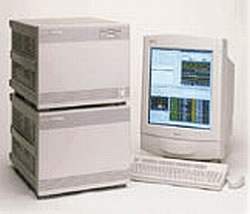
The Agilent 16700 Series Logic Analysis System is a modular debugging platform designed for engineers working on complex digital systems. The 16700 Series combines state and timing analysis, oscilloscope channels, pattern generation, post-processing tool sets, and processor emulation in a single integrated instrument. Three primary mainframe configurations are offered: the 16700B modular mainframe with five measurement slots, the 16702B with a built-in 12.1 inch LCD touchscreen display, and the 16701B expansion frame which adds five additional measurement slots when connected to a 16700B or 16702B.
A logic analysis system captures and displays the digital and analog activity of a prototype or production circuit, providing engineers with visibility into how a design actually behaves. The 16700 Series is used for hardware debug, software-hardware integration, processor and bus characterization, high-speed digital signal analysis, EDA-correlated waveform verification, and stimulus-response testing. The platform supports applications spanning general-purpose hardware debug, microprocessor and bus analysis, high-speed bus measurement, deep trace capture, and analysis of data-intensive computer systems per the configuration tables in the datasheet.
ValueTronics International, LLC stocks, inspects, and tests Agilent 16700 Series logic analysis systems and the full family of measurement modules at our 20,000 sq ft secure facility at 1675 Cambridge Drive, Elgin, Illinois. Because the 16700 Series is a modular platform, accurate documentation of which mainframe, which measurement modules, and which probe accessories are present in a given configuration matters more here than in most categories. Our technicians verify module compatibility, confirm installed memory depth and option codes, and document probe and pod inventory before shipment, so the configuration described in your quote is the configuration that arrives on your bench.
The 16700 Series carries the lineage of Hewlett-Packard's test and measurement business, which was spun out as Agilent Technologies in 1999. Agilent's electronic measurement business was subsequently transferred to Keysight Technologies in 2014. Logic analysis platforms originally documented under the HP and Agilent names are supported and serviced through the Keysight organization today.
The 16700 Series is organized as a modular platform rather than a fixed-configuration instrument. The platform consists of three mainframe variants — the 16700B benchtop mainframe, the 16702B mainframe with integrated touchscreen display, and the 16701B five-slot expansion frame — combined with a family of measurement modules that the buyer selects according to channel count, state speed, timing resolution, memory depth, and trigger sophistication required for the application.
The measurement modules fall into four functional groups per the datasheet: state and timing modules (the 16710A/11A/12A general-purpose series, the 16715A/16A/17A mid-range series, the 16740A/41A/42A and 16750B/51B/52B performance series, the 16753A/54A/55A/56A 600 Mb/s series, and the 16760A 1.5 Gb/s differential series), the 16534A oscilloscope module, the 16720A pattern generator, and emulation modules (E5901A and E5901B). The compare table below tracks the practical differences across the state and timing module range, which is where most configuration decisions get made.
Each pre-owned 16700 Series mainframe and each pre-owned measurement module listed below is its own product page with condition-matched pricing. The platform's modularity means buyers commonly assemble a system from a mainframe plus several modules and pattern generators; each line item is sold and graded individually.
Within the state and timing module group, the principal differentiating axes are state acquisition speed per channel, timing analysis sample rate, memory depth, channel count, and trigger sophistication. The 16710A/11A/12A modules cap state at 100 Mb/s with up to 256 K memory depth on the 16712A, and provide 500 MHz half-channel timing — appropriate for general-purpose hardware and 8/16-bit processor debug. The 16715A/16A/17A modules step up to 167 Mb/s state (333 Mb/s on the 16717A in single-analyzer mode) and add 2 GHz Timing Zoom on the 16716A and 16717A. The 16740 and 16750 Series push state to 200 Mb/s and 400 Mb/s respectively, with memory depths to 64 M samples on the 16752B.
At the top of the range, the 16753A through 16756A modules deliver 600 Mb/s state with 4 GHz Timing Zoom and memory depths from 1 M (16753A) to 128 M samples (16756A), and add eye scan capability for graphical signal integrity assessment. The 16760A is a separate category — 34 channels with differential inputs, 1.5 Gb/s state in half-channel mode, 800 Mb/s full-channel state, and a 500 ps setup-and-hold window tightened by 10 ps adjustment resolution per channel for high-speed bus characterization. Buyers select within and across these tiers based on bus speed, channel count, trace depth, and whether eye-diagram-style signal integrity analysis is required. See the comparison table for the specific values that apply per model.
| Model | Max State Speed | Max Timing Sample Rate | Channels |
|---|---|---|---|
| 16701B | — | — | 5 measurement slots + 2 emulation slots |
| 16700B | — | — | Up to 5 measurement modules |
| 16702B | — | — | Up to 5 measurement modules |
| 1184A | — | — | — |
Additional differences in specifications beyond the few shown above are not listed here — see each model's full specifications below.
| Mainframe Specification | Value |
|---|---|
| Hard Disk Drive | 18 GB formatted |
| Floppy Disk Drive | 1.44 MB formatted, 3.5 inch |
| Internal System RAM (Standard) | 128 MB |
| Internal System RAM (Option 003) | 256 MB total |
| Supported Monitor Resolutions (Standard) | 640 x 480 through 1280 x 1024 |
| Supported Monitor Resolutions (Option 003) | Adds support for up to 1600 x 1200 |
| LAN (16700B Series) | 10BaseT/100BaseT-X (ethertwist): RJ-45 |
| LAN (16700A Series) | 10BaseT (ethertwist): RJ-45; 10Base2: BNC |
| Protocols Supported | TCP/IP, NFS, CIFS (Windows 95/98/NT/2000/XP), FTP, NTP, PCNFS |
| X-Window Support | X Window system version 11, release 6, as a client and server |
| Intermodule Bus Time Correlation Resolution | 2 ns |
| Port In/Out Connectors | BNC |
| Port In Levels | TTL, ECL, or user defined |
| Port In Input Resistance | 4 KΩ |
| Port In Input Voltage | -6V at -1.5 mA to +6V at 1.6 mA |
| Port Out Levels | 3V TTL compatible into 50 Ω |
| Target Control Port Signals | 8 |
| Target Control Port Levels | 3V TTL compatible |
| Target Control Port Connector | 2 rows of 5 pins, 0.1-inch centers |
| Operating Temperature (Instrument) | 0°C to 50°C (32°F to 122°F) |
| Operating Temperature (Disk Media) | 10°C to 40°C (50°F to 104°F) |
| Operating Temperature (Probes/Cables) | 0°C to 65°C (32°F to 149°F) |
| Altitude | To 3000m (10,000 ft) |
| Humidity | 8 to 80% relative humidity at 40°C (104°F) |
| Printer Interface | Parallel for Centronics compatible printers |
| Printers Supported | PostScript and HP PCL printers |
| Power (16700B) | 115/230 V, 48 to 66 Hz, 610 W max |
| Power (16701B) | 115/230 V, 48 to 66 Hz, 545 W max |
| Power (16702B) | 115/230 V, 48 to 66 Hz, 610 W max |
Please review the Manufacturer's Data Sheet to verify published specifications. Feedback on this webpage is always welcome — please reach out to your Test Architect at any time for questions or concerns. Thank you, we truly appreciate you being our customer.
Model No
Agilent
Condition
Used
Manufacturer
Agilent


30+ Years in Business

Secure Payments

Sell Test Equipments

Knowledgeable Staff

On-site Lab
30+ Years in Business
Secure Payments
Sell Test Equipments
Knowledgeable Staff
On-site Lab
Request A Quote


