Chat Live
 Contact Us
 sales@valuetronics.com


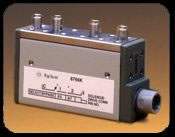
The Agilent 8766/7/8/9K family is a series of microwave single-pole multi-throw (SPMT) switches operating from DC through 26.5 GHz. The family spans four configurations: the 8766K single-pole three-throw, the 8767K single-pole four-throw, the 8768K single-pole five-throw, and the 8769K single-pole six-throw. Each switch consists of two to five solenoid-driven switching sections connected in series, sharing the same proven technology as the Agilent 849X family of step attenuators.
These switches are designed for routing microwave signals in automated test equipment, RF and microwave test systems, and bench configurations where reliable signal path selection is required. The compact form factor and broadband performance from DC through the microwave range make them suitable for integration into multi-instrument test setups where path selection must remain repeatable across millions of cycles.
ValueTronics has supplied professional test and measurement equipment since 1992 from our 20,000 sq ft secure warehouse at 1675 Cambridge Drive, Elgin, Illinois. Every instrument we ship is inspected and performance-tested in-house against the manufacturer's published specifications before leaving our facility, with the condition graded by a technician rather than estimated from a photograph. That is the practical difference between a verified inventory channel and an unverified marketplace listing — and it is why labs, defense contractors, and production-test operations across North America order from us when they need a specific model in known working condition.
The Agilent 8766/7/8/9K switches were developed by Hewlett-Packard's test and measurement division, which was spun off as Agilent Technologies in 1999, and then transferred again in 2014 when the electronic measurement business was established as Keysight Technologies. Switches and step attenuators originally branded HP, then Agilent, and now Keysight share a continuous engineering lineage across the three brand names.
The 8766/7/8/9K family is a coordinated set of four microwave SPMT switches differentiated by throw count. All four models share the same switching architecture, the same DC-to-26.5 GHz frequency range, the same 20 ms maximum switching time, the same 5,000,000-cycle minimum life, and the same set of solenoid voltage, RF connector, and DC connector options. What differs across the family is the number of switching sections, the resulting number of output ports, the maximum SWR at the upper frequency bands, and the per-port insertion loss.
Selecting between the 8766K, 8767K, 8768K, and 8769K is primarily a question of how many output paths the test system needs to route. The 8766K provides three throws, the 8767K provides four, the 8768K provides five, and the 8769K provides six. The 8769K's additional sections result in a slightly higher maximum SWR (2.05 versus 1.8 on the smaller models at 18–26.5 GHz) and an additional per-port insertion-loss increment as ports are added down the chain.
Each pre-owned 8766/7/8/9K model below is listed on its own product page with condition-matched pricing, current availability, and the included accessories specific to that unit. Selecting the correct throw count for the application is the first decision; condition grade and configured options (solenoid voltage, RF connector type, DC drive cable) follow from that.
The four models differ in three measurable ways. First, throw count and switching-section count: 8766K (3 throws / 2 sections), 8767K (4 throws / 3 sections), 8768K (5 throws / 4 sections), and 8769K (6 throws / 5 sections). Second, maximum SWR at the upper bands: the 8766/7/8K group is specified at 1.8 maximum SWR in the 18-to-26.5 GHz band, while the 8769K is specified at 2.05 maximum SWR in that same band. The lower-frequency SWR values (DC to 8 GHz) are identical at 1.3 across all four models.
The third difference is insertion loss as a function of port number. Insertion loss is specified per port, with port 1 at 0.2 dB + 0.05 dB/GHz and rising to port 6 at 0.25 dB + 0.12 dB/GHz. Physical dimensions and net weight scale with section count: 178 grams for the 8766K, 235 grams for the 8767K, 292 grams for the 8768K, and 349 grams for the 8769K. The comparison table that follows summarizes these per-model differences alongside the family-wide specifications.
| Model | Configuration | Frequency Range | Max SWR (12.4-18 GHz) |
|---|---|---|---|
| 8766K | Single-pole, three-throw (SP3T) | DC to 26.5 GHz | 1.6 |
| 8767K | Single-pole, four-throw (SP4T) | DC to 26.5 GHz | 1.6 |
| 8768K | Single-pole, five-throw (SP5T) | DC to 26.5 GHz | 1.6 |
| 8769K | Single-pole, six-throw (SP6T) | DC to 26.5 GHz | 1.8 |
Additional differences in specifications beyond the few shown above are not listed here — see each model's full specifications below.
| Specification | Value |
|---|---|
| Frequency Range | |
| All models (3.5 mm female connectors) | DC to 26.5 GHz |
| Option 876xK-002 (SMA connectors) | DC to 18 GHz |
| Maximum SWR — 8766K / 8767K / 8768K | |
| DC to 8 GHz | 1.3 |
| 8 to 12.4 GHz | 1.5 |
| 12.4 to 18 GHz | 1.6 |
| 18 to 26.5 GHz | 1.8 |
| Maximum SWR — 8769K | |
| DC to 8 GHz | 1.3 |
| 8 to 12.4 GHz | 1.55 |
| 12.4 to 18 GHz | 1.8 |
| 18 to 26.5 GHz | 2.05 |
| Maximum Insertion Loss | |
| Port 1 | 0.2 dB + 0.05 dB/GHz |
| Port 2 | 0.2 dB + 0.06 dB/GHz |
| Port 3 | 0.2 dB + 0.08 dB/GHz |
| Port 4 | 0.25 dB + 0.095 dB/GHz |
| Port 5 | 0.25 dB + 0.108 dB/GHz |
| Port 6 | 0.25 dB + 0.12 dB/GHz |
| RF Performance | |
| RF Input Power (max) | 1 watt average, 100 watts peak (10 µs pulse width) |
| Life (min) | 5 million cycles per section |
| Repeatability | 0.01 dB typ. to 18 GHz; 0.05 dB typ. to 26.5 GHz (up to 5,000,000 cycles) |
| Switching Speed | Maximum 20 ms including settling time |
| RF Connectors | |
| Standard (Option 876xK-004) | 3.5 mm female (SMA compatible) |
| Option 876xK-002 | SMA female (for use only to 18 GHz) |
| Solenoids | |
| Standard 24 V (20 to 30 V) | 130 mA at 24 V; 185 Ohms nominal coil impedance |
| Option 876xK-015: 15 V (13 to 22 V) | 187 mA at 15 V; 80 Ohms nominal coil impedance |
| Option 876xK-011: 5 V (4 to 7 V) | 332 mA at 5 V; 17 Ohms nominal coil impedance |
| Environmental | |
| Operating Temperature | −20°C to +75°C |
| Non-Operating Temperature | −55°C to +85°C |
| Operating Altitude | 15,000 ft (4,570 m) |
| Non-Operating Altitude | 50,000 ft (13,700 m) |
| Humidity | Cycling 5 days, 40°C at 95% RH with condensation |
| Shock, Operating | 10 g, 6 ms, on six sides, three blows |
| Shock, Non-Operating | 500 g, 1.8 ms, in six directions |
| Vibration, Operating | 5 g, 34 to 2000 Hz |
| EMC | Radiated interference within MIL-STD-461B method RE02, VDE 0871, and CTSPR Publication 11 |
| Mounting | |
| Mounting Position | Any orientation; holes threaded for metric screw (M3 x 0.5 x 5.1 deep) |
Please review the Manufacturer's Data Sheet to verify published specifications. Feedback on this webpage is always welcome — please reach out to your Test Architect at any time for questions or concerns. Thank you, we truly appreciate you being our customer.
Model No
Agilent
Condition
Used
Manufacturer
Agilent


30+ Years in Business

Secure Payments

Sell Test Equipments

Knowledgeable Staff

On-site Lab
30+ Years in Business
Secure Payments
Sell Test Equipments
Knowledgeable Staff
On-site Lab
Request A Quote