Chat Live
 Contact Us
 sales@valuetronics.com


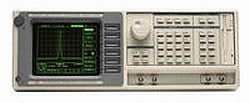
The SR760 and SR770 are single-channel 100 kHz FFT spectrum analyzers offering a 90 dB dynamic range and a 100 kHz real-time bandwidth. Both instruments cover spectrum analysis across the low-frequency and audio band, while the SR770 additionally integrates a low-distortion synthesized source that allows measurement of the transfer functions of electronic and mechanical systems. The combination of speed, dynamic range, and multiple analysis modes makes the pair suitable for a variety of measurement tasks.
Listed applications for these analyzers include acoustics, vibration, noise measurement, and general electronic use. The 15- and 30-band 1/3-octave spectra, with available A-weighting compensation, target acoustics and noise measurement work, computing amplitudes from band −2 (630 mHz) through band 49 (80 kHz). With its low-distortion DDS source, the SR770 performs frequency response measurements on control systems, amplifiers, and electro-mechanical systems, displaying the resulting Bode plot.
ValueTronics stocks and holds its own inventory in a 20,000-square-foot secure warehouse at 1675 Cambridge Drive in Elgin, Illinois. Every pre-owned instrument is inspected and functionally verified in-house before it ships, while new units leave the warehouse factory-sealed exactly as received. That combination of on-hand stock and used-unit verification lets buyers source the right analyzer with confidence in its condition.
The SR760 and SR770 form a two-model line of single-channel 100 kHz FFT spectrum analyzers that share the same core architecture: a 90 dB dynamic range, a 100 kHz real-time bandwidth, dual 24-bit DSPs, and a 16-bit A/D converter sampling at 256 kHz. Both models provide spectrum, power spectral density, time record, and 1/3-octave measurements along with harmonic, sideband, and band analysis.
The defining difference within the family is the synthesized source: the SR770 integrates a low-distortion DDS source for frequency response and transfer function measurements, while the SR760 covers the same spectrum and octave analysis without an internal source.
Each pre-owned model below is its own dedicated product page with condition-matched pricing. Choose the SR760 or SR770 listing that matches your configuration to view the specifications and availability for that pre-owned unit.
The SR770 is distinguished within the line by its built-in low-distortion synthesized source, which adds two-tone IMD test signals, pink and white noise, and chirp output, and enables transfer function measurements to 0.05 dB precision that the source-less SR760 does not provide.
The principal difference shown in the comparison table is the source: the SR770 includes the synthesized DDS source for frequency response work, and the SR760 does not. This distinction is also reflected in the list pricing of the two configurations.
A secondary difference is disk capacity — the 3.5" drive stores 1.44 Mbyte on the SR770 and 720 kbyte on the SR760. Aside from the source and disk capacity, the two models share the same frequency range, dynamic range, real-time bandwidth, input characteristics, analysis modes, and interface set, as the table that follows details.
| Model | Frequency Range | Dynamic Range | Real-Time Bandwidth |
|---|---|---|---|
| SR770 | 476 µHz to 100 kHz | 90 dB (typ.) | 100 kHz |
| SR760 | 476 µHz to 100 kHz | 90 dB (typ.) | 100 kHz |
Additional differences in specifications beyond the few shown above are not listed here — see each model's full specifications below.
| Specification | Value |
|---|---|
| Frequency | |
| Measurement range | 476 µHz to 100 kHz |
| Spans | 191 mHz to 100 kHz (in a binary sequence) |
| Center frequency | Anywhere within the 0 to 100 kHz measurement range |
| Accuracy | 25 ppm from 20 °C to 40 °C |
| Resolution | Span/400 |
| Window functions | Blackman-Harris, Hanning, Flat-Top and Uniform |
| Real-time bandwidth | 100 kHz |
| Signal Input | |
| Number of channels | 1 |
| Input | Single-ended or differential |
| Input impedance | 1 MΩ, 15 pF |
| Coupling | AC or DC |
| CMRR (at 1 kHz) | 90 dB (input range < −6 dBV); 80 dB (input range <14 dBV); 50 dB (input range ≥14 dBV) |
| Noise (Typical) | 5 nVrms/√Hz at 1 kHz (−166 dBVrms/√Hz) |
| Noise (Maximum) | 10 nVrms/√Hz (−160 dBVrms/√Hz) |
| Amplitude | |
| Full-scale input range | −60 dBV (1.0 mVp) to +34 dBV (50 Vp) in 2 dB steps |
| Dynamic range | 90 dB (typ.) |
| Harmonic distortion | No greater than −80 dB from DC to 100 kHz (input range 0 dBV) |
| Spurious | No greater than −85 dB below full scale (<200 Hz). No greater than −90 dB below full scale (to 100 kHz). (−50 dBV input range) |
| Input sampling | 16-bit A/D at 256 kHz |
| Accuracy | ±0.3 dB ± 0.02 % of full scale (excluding windowing effects) |
| Averaging | RMS, Vector and Peak Hold. Linear and exponential averaging up to 64k scans. |
| Trigger Input | |
| Modes | Continuous, internal, external, TTL |
| Internal level | Adjustable to ±100 % of input scale. (Positive or negative slope) |
| Min. trigger amplitude (internal) | 10 % of input range |
| External level | ±5 V in 40 mV steps, 10 kΩ impedance (Positive or negative slope) |
| Min. trigger amplitude (external) | 100 mV |
| External TTL | Requires TTL level (low <0.7 V, high >2 V) |
| Post-trigger | Measurement record is delayed by 1 to 65,000 samples (1/512 to 127 time records) after the trigger. Delay resolution is 1 sample (1/512 of a record). |
| Pre-trigger | Measurement record starts up to 51.953 ms prior to the trigger. Delay resolution is 3.9062 ms. |
| Phase indeterminacy | <2° |
| Display Functions | |
| Display | Real, imaginary, magnitude or phase |
| Measurements | Spectrum, power spectral density, time record and 1/3 octave |
| Analysis | Band, sideband, total harmonic distortion and trace math |
| Graphic expand | Display expand up to ×50 about any point |
| Harmonic marker | Displays up to 400 harmonics |
| Data tables | Lists Y values of up to 200 points |
| Limit tables | Detects data exceeding up to 100 user-defined upper and lower limit trace segments. |
| Source (SR770 only) | |
| Amplitude range | 0.1 mVp to 1.0 Vp |
| Amplitude resolution | 1 mVp (output >100 mVp), 0.1 mVp (output <100 mVp) |
| DC offset | <10.0 mV (typ.) |
| Output impedance | <5 Ω, 50 mA peak output current |
| Sine Source | |
| Frequency range | DC to 100 kHz |
| Resolution | 15.26 mHz |
| Amplitude accuracy | ±1 % (0.09 dB) of setting |
| Spectral purity (Harmonics and sub-harmonics) | −80 dBc, f <10 kHz; −70 dBc, f >10 kHz |
| Spectral purity (Spurious) | < −100 dB full scale |
| Two-Tone Source | |
| Frequency range | DC to 100 kHz |
| Resolution | 15.26 mHz |
| Amplitude accuracy | ±1 % (0.09 dB) of setting |
| Spectral purity (Harmonics and sub-harmonics) | −80 dBc (f <10 kHz); −70 dBc (f >10 kHz) |
| Spectral purity (Spurious) | < −100 dB full scale |
| White Noise Source | |
| Frequency range | DC to 100 kHz (all spans) |
| Flatness | <1.0 dBpp (rms averaged spectra) |
| Pink Noise Source | |
| Frequency range | DC to 100 kHz (all spans) |
| Flatness | <4.0 dBpp (using 1/3 oct. analysis) |
| Chirp Source | |
| Output | Equal amplitude sine waves at each frequency bin of the current span |
| Flatness | <0.05 dBpp (typ.); <0.2 dBpp (max.) |
| Phase | AutoPhase function calibrates to current phase spectrum. |
| General | |
| Monitor | Monochrome CRT, 640H by 480V resolution, adjustable brightness and position |
| Interfaces | IEEE-488.2, RS-232 and Printer interfaces standard. An XT keyboard input is provided for additional flexibility. |
| Hardcopy | Screen dumps and table and setting listings to dot matrix and LaserJet compatible printers. Data plots to HP-GL compatible plotters (RS-232 or IEEE-488.2). |
| Disk | 3.5" DOS compatible format, 1.44 Mbyte capacity. Stores data and instrument configurations. |
| Power | 60 W, 100/120/220/240 VAC, 50/60 Hz |
| Dimensions | 17" × 6.25" × 18.5" (WHD) |
| Weight | 36 lbs. |
| Warranty | One year parts and labor on defects in materials and workmanship |
This pre-owned unit is inspected and functionally verified in-house before it ships and is backed by our pre-owned warranty. To confirm its exact condition, firmware revision, installed options, or included accessories for your application before ordering, contact our Test Architects.
ValueTronics supplies both new and used test and measurement equipment. New units ship factory-sealed, exactly as received from the manufacturer; every used unit is inspected and functionally verified in-house at our 20,000 sq ft secure facility in Elgin, Illinois before it ships. Our Test Architects can help you select the condition, calibration, and configuration that fit your application.
Please review the Manufacturer's Data Sheet to verify published specifications. Feedback on this webpage is always welcome — please reach out to your Test Architect at any time for questions or concerns. Thank you, we truly appreciate you being our customer.
Model No
Stanford
Condition
Pre-Owned
Manufacturer
Stanford Research Systems
Spec_ana_freq
100 kHz


30+ Years in Business

Secure Payments

Sell Test Equipments

Knowledgeable Staff

On-site Lab
30+ Years in Business
Secure Payments
Sell Test Equipments
Knowledgeable Staff
On-site Lab
Request A Quote