Chat Live
 Contact Us
 sales@valuetronics.com


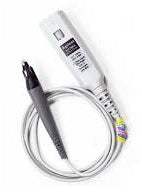
The Keysight N2750A Series—comprising the N2750A, N2751A, and N2752A InfiniiMode differential active probes—integrates many of the features and characteristics needed for general-purpose, high-speed differential probing. Each probe offers 2:1 and 10:1 dual attenuation settings, with the dual attenuation range automatically configured depending on the size of the input signal, allowing a single probe to be used across a broad range of applications.
These probes are intended for digital system design, component design and characterization, and differential serial bus measurements. Their high input resistance of 200 kΩ differential (100 kΩ each input to ground) and extremely low 700 fF input capacitance minimize circuit loading, and with their wide 10 Vpp dynamic range and ± 15 V offset range they can also be used in a wide variety of analog signal measurements. The InfiniiMode capability further allows convenient measurements of differential, single-ended, and common-mode signals with a single probe tip without reconnecting the probe to change the connection.
ValueTronics stocks and holds its own test-and-measurement inventory in a 20,000 sq ft secure warehouse at 1675 Cambridge Drive in Elgin, Illinois, giving buyers a single, accountable source for both current and legacy instruments. Every pre-owned unit is inspected and functionally verified in-house before it ships, while new units ship factory-sealed exactly as received from the manufacturer.
Keysight Technologies traces its test-and-measurement heritage to Hewlett-Packard, whose instrument business was spun off as Agilent Technologies in 1999 and then established as the independent Keysight Technologies in 2014.
The N2750A Series is a generation of InfiniiMode differential active probes offered in three models—the N2750A, N2751A, and N2752A—that share a common architecture and differ primarily in probe bandwidth. All three provide 2:1/10:1 dual attenuation, InfiniiMode operation, the same input resistance and offset specifications, and AutoProbe-interface power and auto-configuration.
The series is compatible with the AutoProbe interface of Keysight InfiniiVision and Infiniium oscilloscopes, and each model ships standard with solder-in, browser, and socketed tips so the buyer selects the model by required bandwidth rather than by feature set.
Each model below is its own dedicated product page with condition-matched pricing for the pre-owned unit you select. Choose the model that matches your required bandwidth, then select the listing for the condition you need.
The three models differ chiefly in warranted probe bandwidth and the corresponding rise time: the N2750A is 1.5 GHz (233 psec rise time), the N2751A is 3.5 GHz (100 psec), and the N2752A is 6 GHz warranted / 7 GHz typical (58.3 psec). System bandwidth with a Keysight oscilloscope is correspondingly 1 GHz, 2.5 GHz, and 4/6 GHz. Refer to the comparison table for the per-model values.
Tip selection also affects achievable bandwidth: the browser tip reaches up to 7 GHz typical with the N2752A, while solder-in and socketed tips support up to 2.5 GHz and 3 GHz respectively with the N2751A/N2752A, and 1.5 GHz with the N2750A. Recommended-oscilloscope software versions vary by model as listed in the specifications. The browser tip supports differential mode only and does not provide InfiniiMode, whereas the solder-in and socketed tips do.
| Model | Bandwidth | Rise Time | System Bandwidth |
|---|---|---|---|
| N2752A | 6 GHz (warranted), 7 GHz (typical) | 58.3 psec | 4/6 GHz |
| N2750A | 1.5 GHz | 233 psec | 1 GHz |
| N2751A | 3.5 GHz | 100 psec | 2.5 GHz |
Additional differences in specifications beyond the few shown above are not listed here — see each model's full specifications below.
| Specification | Value |
|---|---|
| Bandwidth and Timing | |
| Probe bandwidth (–3 dB) | 6 GHz (warranted), 7 GHz (typical) |
| Rise time, probe only (10-90%) | 58.3 psec |
| System bandwidth (with Keysight oscilloscope) | 4/6 GHz (with Keysight's 4/6 GHz Infiniium oscilloscope) |
| Maximum signal slew rate | 30 V/ns (differential, 10x), 15 V/ns (single-ended, 10x) |
| Propagation delay | 6.85 nsec |
| Input Characteristics | |
| Input resistance (@DC) | 200 kΩ ± 2 % (differential mode), 100 kΩ ± 2 % (single-ended mode), 50 kΩ ± 2 % (common mode) |
| Input capacitance | 700 fF (with browser) |
| Attenuation ratio (@DC) | 2:1/10:1 |
| Input dynamic range | ± 1 V, 2 Vpp (@2:1)/± V, 10 Vpp (@10:1), mains isolated |
| Input common mode range | ± 15 V (from DC to 100 Hz), ± 2.5 V (for >100 Hz) |
| Maximum non-destructive input voltage | ± 30 V (DC + peak AC), mains isolated |
| Output impedance | 50 Ω |
| Offset | |
| Offset range | ± 15 V |
| Offset accuracy | < 3 % |
| Offset gain accuracy | < 3 % before calibration, < 1 % after calibration |
| Zero offset error referred to input | < 30 mV before calibration scope, < 5 mV after calibration scope |
| Rejection and Noise | |
| Differential mode rejection ratio | 30 dB at 1 GHz |
| Channel isolation, at single-ended mode | 20 dB at 1 GHz |
| Noise referred to input | 2.5 mVrms (@2:1), 7 mVrms (@10:1) |
| ESD tolerance | > 8 kV from 100 pF, 300 Ω, HBM |
| General | |
| Cable length | 1.3 m |
| Probe weight | 100 g |
| Environmental | |
| Ambient operating temperature | 0 to +40 ºC |
| Ambient non-operating temperature | –40 to +70 ºC |
| Operating humidity | Up to 95 % RH @ +40 ºC, non-condensing |
| Non-operating humidity | Up to 90 % RH @ +65 ºC, non-condensing |
| Operating altitude | 4,600 m |
| Non-operating altitude | 15,300 m |
| EMC/EMI | Radiated Emission: CISPER 11 Group 1, Class A. ESD: IEC61000-4-2 4KV contact discharge, 8KV air discharge |
| Recommended Keysight Oscilloscopes | |
| Recommended oscilloscopes | Infiniium 9000 and 90000A Series with software ver 3.5 or higher, S-Series with 5.0 or higher |
| Standard Accessories | |
| InfiniiMode solder-in tips | 2x |
| InfiniiMode socketed tip | 2x |
| Differential browser tip | 2x |
| Calibration certificate | 1x |
| Accessory configuration card | 1x |
Important: Maximum non-destructive input voltage: ± 30 V (DC + peak AC), mains isolated.
Important: The N4822A socketed tip for USB/ethernet application fixtures is not included in the standard probe kit and must be ordered separately.
Important: Replacement tips are ordered by part number: N2776A differential browser tips (qty 3), N2777A InfiniiMode solder-in tips (qty 3), and N2778A InfiniiMode socketed tips (qty 3); each replacement part comes with two each of solder-in, socketed and browser tips per probe.
Important: The N2750A Series differential probes can be used with the Infiniium 90000X/Q Series scope and the N5442A precision BNC adapter.
Recommended pairing: use the Keysight E2655C performance verification and deskew fixture, and the N2787A 3D probe positioner, both listed among the recommended accessories for this series.
This pre-owned unit is inspected and functionally verified in-house before it ships and is backed by our pre-owned warranty. To confirm its exact condition, firmware revision, installed options, or included accessories for your application before ordering, contact our Test Architects.
ValueTronics supplies both new and used test and measurement equipment. New units ship factory-sealed, exactly as received from the manufacturer; every used unit is inspected and functionally verified in-house at our 20,000 sq ft secure facility in Elgin, Illinois before it ships. Our Test Architects can help you select the condition, calibration, and configuration that fit your application.
Please review the Manufacturer's Data Sheet to verify published specifications. Feedback on this webpage is always welcome — please reach out to your Test Architect at any time for questions or concerns. Thank you, we truly appreciate you being our customer.
Model No
Keysight
Condition
Pre-Owned
Manufacturer
Keysight Technologies
Diff_probe_freq
6 GHz


30+ Years in Business

Secure Payments

Sell Test Equipments

Knowledgeable Staff

On-site Lab
30+ Years in Business
Secure Payments
Sell Test Equipments
Knowledgeable Staff
On-site Lab
Request A Quote